Why Does Exercise Feel Harder As We Get Older?
Have you ever found yourself thinking, “I used to be able to do that,” or wondering why exercise seems to take more effort than it once did?
You’re not imagining it. Our bodies and our circumstances change over time. An old injury may make us more cautious. We may feel stiffer, less steady, or slower to recover. Work, family, health, and caring responsibilities can also leave less time and energy for movement.
That doesn’t mean you’ve failed, or that you have to give up. It may mean it’s time to find an approach that fits you now.
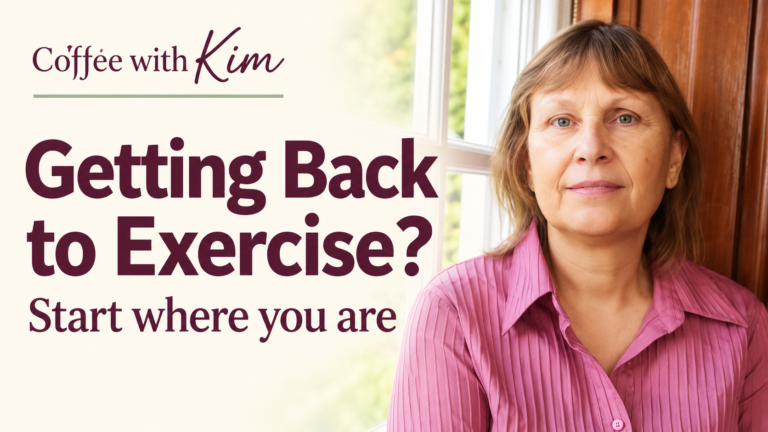
Your body has changed. Your starting point can change too.
There isn’t one single reason exercise can feel harder. Strength, balance, mobility, confidence, sleep, stress, and health can all play a part. Sometimes we’ve also lost the habit of moving regularly, so getting started feels like a bigger step.
It’s easy to compare today’s body with what we could do years ago. But that comparison can make it harder to notice what your body can do now. The aim doesn’t have to be getting back to an old version of yourself. It can be building movement that helps you feel more capable in everyday life.
Adapt the exercise to suit you
If an activity feels too demanding, try changing one part of it. You might make it shorter, slow the pace, use a chair or a wall for support, reduce the range of movement, or take a longer rest. You could also choose a different activity that feels more comfortable.
A smaller session still counts. A few minutes of gentle movement can be a useful way to begin, especially if you’re rebuilding confidence or returning after time away. You can build gradually as you learn what feels manageable.
And there’s no need to copy someone else’s pace or routine. The right version is the one that works for your body, your day, and your goals.
When injury or discomfort is part of the picture
An injury can change how you move and how safe exercise feels. It’s understandable to feel wary about making things worse. The answer isn’t always to push through, and it isn’t always to stop moving altogether. It depends on what’s going on and what support you need.
If you have a new or worsening problem, significant pain, or a health condition that affects exercise, speak with a suitable health professional for advice tailored to you. Once you know what’s appropriate, you can look for ways to keep moving within those boundaries.
Make movement useful to your life
Exercise doesn’t have to mean chasing a particular look or keeping up with a demanding class. It can be about feeling steadier on your feet, getting up from a chair more easily, carrying the shopping, or having the confidence to try something new.
Start with a question: What would you like everyday movement to feel easier? Let that guide your next step. Choose something small enough to do, and give yourself credit for doing it.
If you’d like to share, I’d love to hear what has helped you keep moving or start again. If you want to exercise with me for free, you can find workouts at www.youtube.com/keepfitwithkim
Kim x
About Kim: Kim is a Chartered Activity & Health Practitioner and personal trainer with 35 years’ teaching experience.
This article offers general information, not individual medical advice. If you’re unsure what exercise is suitable for you, or you have a new or worsening injury or health concern, seek advice from an appropriate health professional.